
Mediation reduces hostility between parties, allows them to freely express their views and interests, and leads to faster resolution of disputes.
Since mediation settlements are arrived at by mutual consent, the likelihood of compliance is significantly higher compared to court-awarded decrees, which often require further execution proceedings.
1.1 Understanding Mediation
Before understanding what pre-suit mediation is, it is important to first understand the concept of mediation itself.
Mediation is a voluntary, non-adversarial dispute resolution process in which the parties to a dispute attempt to resolve their differences with the assistance of a neutral third party known as a mediator. Unlike court proceedings, mediation is not about proving who is right or wrong. Instead, it focuses on helping parties arrive at a mutually acceptable settlement.
In mediation, the settlement is arrived at by the parties themselves. Once a mediation settlement agreement is finalised and signed, it brings an end to all past and present disputes between the parties relating to the same subject matter. Any pending litigation between the parties also comes to an end upon settlement.
1.2 What Is Pre-Suit Mediation?
Pre-suit mediation refers to mediation proceedings that are initiated before filing a suit or complaint in court.
Instead of immediately approaching the court, a person may choose to initiate mediation proceedings before a recognised mediation centre. The objective is to explore the possibility of settlement without invoking the formal judicial process.
Pre-suit mediation allows parties to resolve disputes at an early stage and avoid unnecessary litigation. If the dispute is settled, the need to file a case in court is completely avoided.
1.3 Advantages of Pre-Suit Mediation
One of the key advantages of pre-suit mediation is that it allows the parties to give the dispute a genuine opportunity for settlement before escalating it into formal legal proceedings.
Pre-suit mediation also sends a strong message to the opposite party that while you are willing to resolve the matter amicably, you are also prepared to initiate legal action if mediation fails. This often encourages more meaningful participation from both sides.
Additionally, pre-suit mediation saves time, reduces costs, and helps parties avoid the emotional and financial burden of prolonged litigation.
1.4 Matters Suitable and Unsuitable for Mediation
Mediation is recommended in disputes where there is scope for discussion and compromise, particularly in matters involving ongoing relationships such as family, commercial, employment, property, and contractual disputes.
However, not all disputes are suitable for mediation. Matters involving serious criminal offences, issues affecting public rights, or disputes that cannot legally be compromised are generally not considered mediatable.
1.5 The Mediation Process
When a matter is referred to mediation or initiated through pre-suit mediation, both parties are required to appear before the mediation centre.
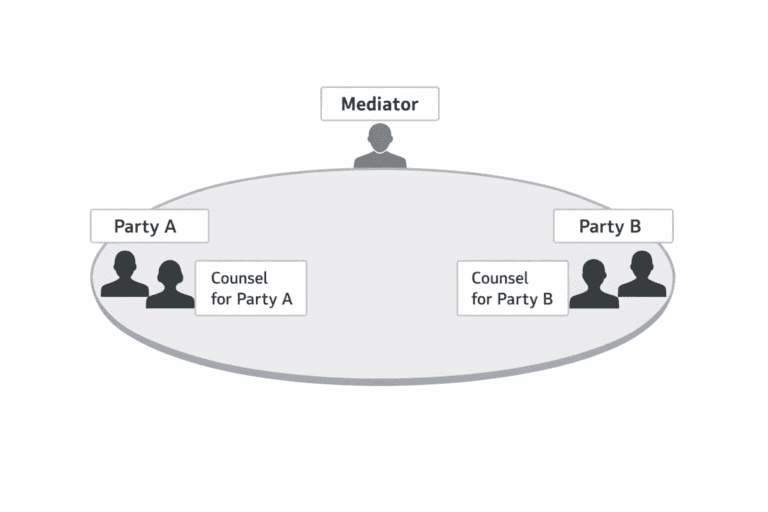
The matter is listed before an appointed mediator. Depending on the mediation centre, there may be one mediator or a panel of two mediators. Mediation proceedings are usually conducted in a closed and private room to ensure confidentiality.
During the mediation sessions, the parties interact with each other and with the mediator, discussing their grievances, concerns, and possible solutions moving forward
1.6 Role of Mediator
The mediator is a neutral third party who has no association with either of the parties. It is important to understand that the mediator is not a judge and does not adjudicate the dispute.
The mediator does not have access to the case file and does not pass any orders on merits. The mediator’s role is limited to facilitating communication, identifying common ground, and guiding the parties towards a mutually acceptable settlement.
1.7 Confidentiality in Mediation
Confidentiality is a cornerstone of the mediation process.
Everything stated during mediation—including admissions, statements, offers, and counter-offers—remains strictly confidential. Such information cannot be disclosed to the court and is not admissible as evidence in any legal proceedings.
Parties are also prohibited from recording mediation proceedings, whether openly or secretly, and using such recordings in court
1.8 Outcome of Mediation Proceedings
If the parties arrive at a settlement, the terms are reduced to writing and signed by the parties.
If mediation fails, the file is returned to the referring court or authority with the simple remark “not settled.” The mediator does not record what transpired during mediation or assign responsibility for the failure of mediation.
1.9 Mandatory and Voluntary Nature of Mediation
Mediation is generally a voluntary process.
However, certain statutes such as the Commercial Courts Act, 2015 and the Family Courts Act require disputes to be compulsorily referred to mediation. Even in such cases, participation in mediation does not mean that parties are compelled to settle. The decision to settle always remains with the parties.
1.10 Participation of Lawyers in Mediation
Advocates and lawyers are permitted to participate in mediation proceedings. Other representatives of the parties may also be present.
The mediator, however, has the discretion to limit the number of persons present during mediation sessions to ensure effective communication and meaningful discussions.
1.11 Private Sessions (Caucus) in Mediation
During mediation, the mediator may conduct private sessions, also known as caucus sessions. In such sessions, the mediator speaks to one party privately while asking the other party to step outside the mediation room.
This is a normal and accepted practice aimed at better understanding each party’s concerns and expectations. Both parties are usually given equal opportunity for private sessions
1.12 Location and Recognition of Mediation Centres
Earlier, only court-annexed mediation centres located within court premises were formally recognised.
Following the enactment of the Mediation Act, 2023, private mediation centres have also been recognised, and settlements arrived at through such centres are legally valid. However, the statutory body known as the Mediation Council of India, responsible for regulating private mediation centres, is yet to be constituted.
1.13 Why Mediation is Effective?
Mediation reduces hostility between parties, allows them to freely express their views and interests, and leads to faster resolution of disputes.
Since mediation settlements are arrived at by mutual consent, the likelihood of compliance is significantly higher compared to court-awarded decrees, which often require further execution proceedings.
Frequently Asked Questions (FAQ’s)
Q. Is mediation mandatory?
Mediation is generally voluntary. In certain cases, laws such as the Commercial Courts Act and Family Courts Act require compulsory referral to mediation, but settlement itself is never mandatory.
Q. Is the mediator a judge?
No. The mediator is not a judge and does not decide the dispute or pass any order on merits.
Q. Are lawyers allowed during mediation proceedings?
Yes. Lawyers and authorised representatives are permitted to participate, subject to the mediator’s discretion.
Q. What happens if mediation fails?
If mediation does not result in a settlement, the matter proceeds to court. The mediator only reports that the matter was “not settled.”
Q. Are mediation proceedings confidential?
Yes. All mediation proceedings are strictly confidential and cannot be used as evidence in court.
Q. Can mediation settlements be enforced?
Yes. A settlement agreement arrived at through mediation is legally binding and enforceable as per law.